
Managing a large number of X accounts at scale presents a fundamental challenge. As activity increases, so does exposure to detection systems. Many projects assume that suspensions are unavoidable when operating multiple accounts, especially in the crypto space where competition and automation are common. However, with the right structure, it is possible to maintain stability. This case study focuses on Twitter account suspension prevention through a system designed for consistency, control, and realistic behavior patterns.
This article explains the framework behind an avoid Twitter suspension strategy that enabled the management of a 500-account network without triggering suspensions. Rather than relying on isolated tactics, this guide examines the underlying principles, risk factors, and system design choices that made this possible. By understanding these elements, projects can approach scaling with a structured methodology instead of trial and error.
The Challenge: Managing Large-Scale Twitter Account Networks Safely
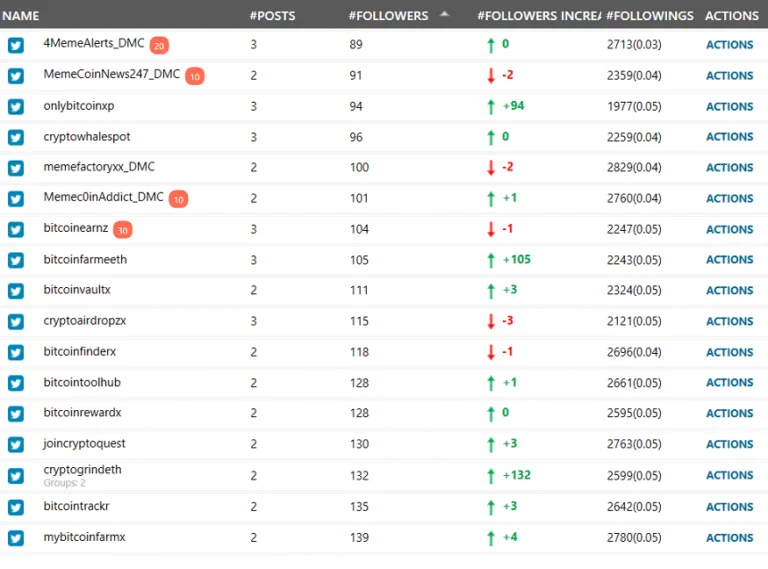
Operating a multi-account system introduces complexity at every level. Each account generates its own activity patterns, engagement signals, and interaction history. When multiplied across hundreds of accounts, these patterns become highly visible to detection systems.
From a manage multiple Twitter accounts perspective, the primary challenge is coordination. Without proper structure, accounts may exhibit synchronized behavior, repetitive actions, or inconsistent activity levels. These patterns increase the likelihood of detection.
Another challenge is scalability. As the network grows, maintaining consistency becomes more difficult. Small inconsistencies at the individual account level can compound into significant risks at scale.
There is also the issue of resource management. Monitoring hundreds of accounts requires a system that can track behavior, performance, and potential risks in real time.
Finally, the crypto niche adds additional pressure. High competition leads to aggressive growth strategies, which often conflict with platform expectations.
These challenges highlight the need for a system-based approach rather than ad hoc execution.
Understanding Suspension Risks and Detection Systems
To implement effective Twitter account suspension prevention, it is necessary to understand how detection systems evaluate account activity.
From an avoid Twitter suspension strategy perspective, suspensions are rarely triggered by a single action. Instead, they result from patterns that indicate inauthentic or coordinated behavior.
One of the key risk factors is synchronization. When multiple accounts perform similar actions at the same time, it creates a clear signal of automation. Detection systems are designed to identify such clustering.
Another risk factor is repetition. Identical or highly similar actions across accounts reduce variability and increase predictability. From a safe Twitter automation system standpoint, this predictability is a primary trigger for flags.
Account quality also plays a role. Networks composed of low-quality or inactive accounts are more likely to be flagged. Engagement from such accounts weakens overall signal credibility.
Growth patterns are closely monitored as well. Sudden increases in activity or followers across multiple accounts can indicate manipulation.
Behavioral inconsistency is another issue. Accounts that alternate between high activity and inactivity create unstable patterns that are difficult to evaluate positively.
Understanding these risks provides the foundation for building a system that avoids them.
Core Principles Behind a 0% Suspension Strategy
Achieving Twitter account suspension prevention at scale requires a set of principles that guide every aspect of system design and execution.
The first principle is pattern diversity. Each account must exhibit unique behavior. This includes variations in timing, interaction types, and activity levels. From an avoid Twitter suspension strategy perspective, diversity reduces the likelihood of coordinated patterns being detected.
The second principle is controlled distribution. Activity should be spread across time and accounts rather than concentrated. This prevents clustering and supports more natural behavior patterns.
The third principle is gradual scaling. Growth should increase over time instead of occurring in sudden spikes. This allows signals to develop in a way that aligns with platform expectations.
The fourth principle is quality control. Accounts within the network must maintain a baseline level of credibility. This includes profile completeness, relevant activity, and consistent engagement.
The fifth principle is stability. Behavior patterns should remain consistent over time, with variation occurring within controlled ranges. From a multi-account growth strategy standpoint, stability is essential for long-term performance.
These principles form the foundation of the system. Without them, scaling would introduce unacceptable levels of risk.
Infrastructure Design: How the 500-Account System Was Built
The success of this Twitter account suspension prevention strategy was not based on isolated actions. It was built on a structured infrastructure that controlled how each account operated within the network.
From a multi-account growth strategy perspective, the first step was segmentation. The 500 accounts were not treated as a single unit. They were divided into smaller clusters, each with its own activity rhythm, interaction scope, and behavioral pattern. This reduced the risk of synchronized activity across the entire network.
The second component was activity allocation. Each account was assigned a specific range of actions per day, including posting, liking, and replying. These ranges were not fixed values but controlled limits, allowing variation while maintaining consistency.
Timing distribution was another critical layer. Actions were scheduled across different time windows rather than concentrated in specific periods. From a safe Twitter automation system standpoint, this prevented clustering and created a more natural activity flow.
Profile diversity was also built into the infrastructure. Accounts differed in content focus, interaction style, and engagement intensity. This ensured that no two accounts behaved identically over time.
Finally, the system incorporated gradual onboarding. Not all accounts operated at full capacity immediately. Activity levels increased progressively, allowing each account to build its own behavioral history.
This infrastructure created a controlled environment where scale did not lead to uniformity.
Behavior Engineering: Creating Human-Like Activity at Scale
While infrastructure defines structure, behavior determines how the system is perceived. The core challenge was to ensure that all activity across the network resembled real user behavior.
From an avoid Twitter suspension strategy perspective, behavior engineering focused on variability within controlled boundaries.
The first element was interaction diversity. Accounts did not perform the same type of action repeatedly. Instead, engagement included a mix of likes, replies, and conversations. This created a more complete interaction profile.
The second element was timing variation. Actions were distributed unpredictably across time. Even within the same cluster, accounts did not act simultaneously. This reduced the visibility of coordination.
Contextual relevance was also prioritized. Engagement was aligned with content topics and account niches. From a manage multiple Twitter accounts standpoint, this ensured that interactions appeared meaningful rather than random.
Another key factor was activity moderation. Even at scale, each account operated within realistic limits. Excessive activity was avoided to maintain credibility.
Behavioral memory was the final component. Each account developed its own history of activity, which influenced future behavior patterns. This created continuity and strengthened authenticity.
Through behavior engineering, the system transformed automation into realistic interaction patterns.
Monitoring and Control: Maintaining Stability Across the Network
Scaling to 500 accounts requires continuous oversight. Without monitoring, even well-designed systems can drift into patterns that increase risk.
From a Twitter account suspension prevention perspective, monitoring focused on identifying deviations from expected behavior.
The first layer of control was activity tracking. Metrics such as posting frequency, engagement volume, and timing distribution were monitored across all accounts. This allowed for early detection of clustering or repetition.
The second layer was performance analysis. Engagement rates, reach, and interaction quality were evaluated to ensure that signals remained balanced. From a multi-account growth strategy standpoint, performance data guided adjustments.
Risk indicators were also tracked. Sudden changes in activity, unusual engagement patterns, or inconsistencies between accounts were flagged for review.
Adjustment mechanisms were built into the system. When patterns approached risk thresholds, activity levels were modified, timing was redistributed, or engagement types were adjusted.
Finally, periodic resets were applied. Accounts were allowed to reduce activity temporarily to maintain long-term stability.
This monitoring framework ensured that the system remained aligned with platform expectations over time.
CryptoWeet Network Model: Scaling Accounts Without Risk
The principles demonstrated in this case study are the foundation of the CryptoWeet approach to scaling.
CryptoWeet does not treat growth as a single action. It operates as a network-based system where each account contributes to a larger structure while maintaining its own behavioral identity.
The first component is controlled activity. Instead of maximizing volume, the system defines ranges and distributes actions across time. From a safe Twitter automation system perspective, this reduces pattern visibility.
The second component is pattern variation. Each account operates with unique timing, interaction types, and activity levels. This prevents synchronization and supports authenticity.
The third component is risk balancing. Growth is introduced gradually, and signals are aligned across followers, engagement, and content. From an avoid Twitter suspension strategy standpoint, this balance is critical.
This model also integrates the “The Power of 1000” framework:
- The First 1000 establishes a credible base of real-looking accounts
- Engagement 1000 activates interaction patterns across the network
- The 1000 Foundation aligns signals to maintain consistency
By combining these elements, CryptoWeet creates a system where scale does not increase risk, but is managed through structure.
Conclusion: Scale Is Safe Only When It Is Structured
This case study demonstrates that Twitter account suspension prevention is not about limiting scale. It is about controlling how scale is implemented.
From an avoid Twitter suspension strategy perspective, the key is pattern management. Detection systems respond to behavior, not simply volume.
By building infrastructure, engineering behavior, and maintaining continuous monitoring, it is possible to operate large account networks without triggering suspensions.
Projects that approach scaling without structure often encounter instability and risk. Those that treat growth as a system achieve consistent performance.
Because at scale, safety is not accidental. It is designed.